
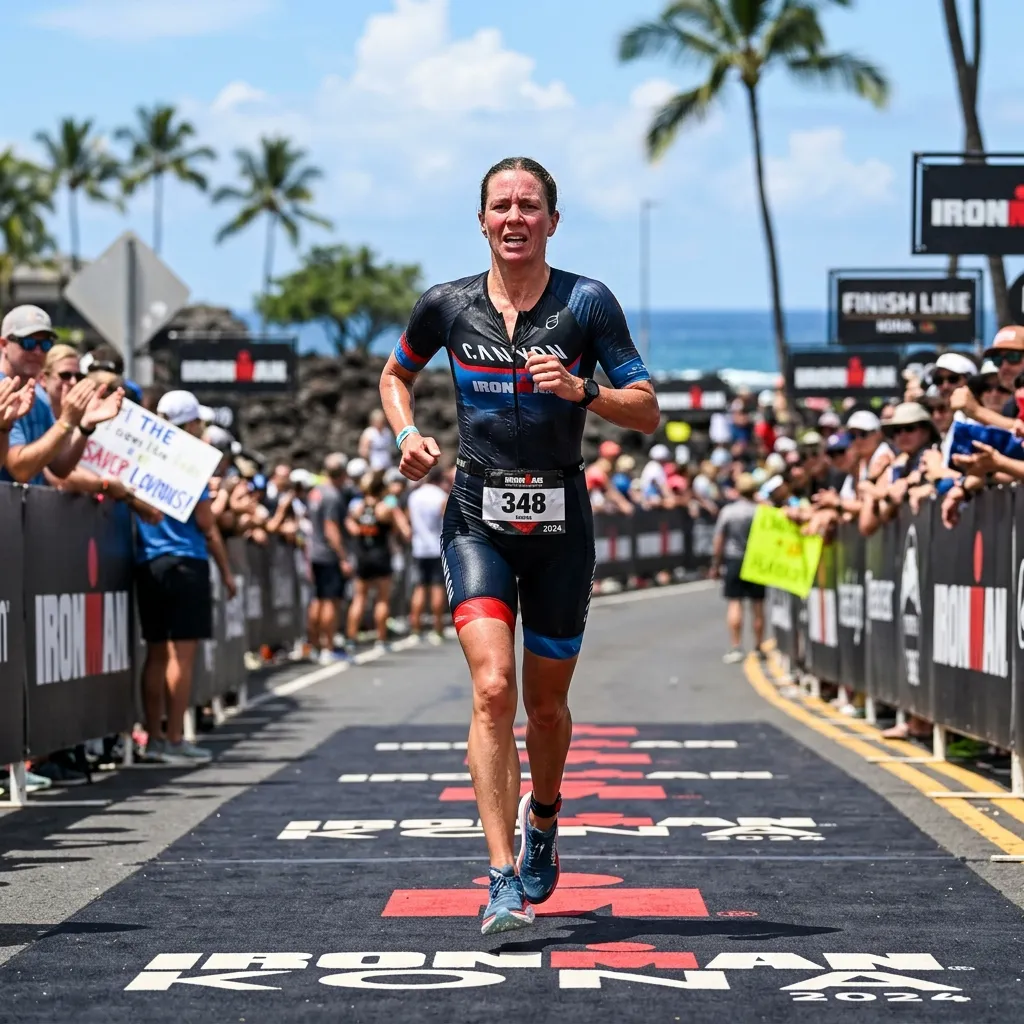
You're at mile 18 of the marathon. Your legs feel like concrete. Your brain is foggy. Every step is a negotiation with your body. You've hit "the wall."
This isn't just fatigue. This is bonking—the dreaded consequence of glycogen depletion that can derail months of training in a single hour.
But here's the empowering truth: bonking isn't random. It's predictable. It's physiological. And most importantly—it's preventable.
This pillar guide explains exactly why Ironman athletes bonk, using clear science (no jargon overload). You'll learn:
- What glycogen is and why your body runs out of it
- The precise moment bonking begins (it's earlier than you think)
- How to spot warning signs before it's too late
- Evidence-based strategies to protect your fuel stores
- What to do if you start bonking mid-race
Whether you're preparing for your first Ironman or chasing a PR, understanding glycogen depletion is your secret weapon.
Use our free Ironman nutrition calculator to model how smart fueling and pacing protect you from the bonk.
Quick Answer: Why Do Ironman Athletes Bonk?
Ironman athletes "bonk" (or hit the wall) due to glycogen depletion in their working muscles and liver. Because the human body can only store 300–500 grams of carbohydrate (~1,200–2,000 calories) but burns 6,000–12,000 calories during a 140.6-mile race, athletes run out of fuel within 2–3 hours of high-intensity effort without structured race-day carb intake and disciplined Zone 2 pacing.
Key Takeaways
- Glycogen is Limited: Your premium high-octane fuel tank holds just ~2,000 calories, while your race requires up to 12,000 calories.
- Pacing is Fuel Sparing: Zone 2 effort spares glycogen by burning up to 50–70% fat. Pacing too fast early in the swim or bike will deplete glycogen twice as fast.
- Pre-Race Supercompensation: A structured 3–4 day low-fiber carb-loading protocol increases baseline muscle glycogen storage by 20–40%.
- Gut Training is Essential: You must train your digestive system over 8–12 weeks to absorb 60–90g of carbs per hour on race day.
Table of Contents
- What Is "Bonking," Really?
- Glycogen 101: Your Body's Premium Fuel
- The Math: Why You Run Out of Fuel in an Ironman
- The Physiology: What Happens When Glycogen Runs Low
- Bonking vs. Fatigue: Know the Difference
- The 4 Primary Causes of Ironman Bonking
- Prevention Strategy #1: Smart Carb Loading
- Prevention Strategy #2: Race-Day Fueling That Works
- Prevention Strategy #3: Pacing to Preserve Glycogen
- What to Do If You Start Bonking Mid-Race
- Sample Anti-Bonk Nutrition Plan
- Frequently Asked Questions
- Tools to Build Your Bonk-Proof Plan
1. What Is "Bonking," Really?
The Simple Definition
Bonking (also called "hitting the wall") is a sudden, severe drop in performance caused by depleted muscle glycogen stores. It's not just "feeling tired." It's a physiological crisis.
What Bonking Feels Like
Athletes describe bonking as:
- Legs turning to "lead" or "concrete"
- Sudden, overwhelming fatigue unrelated to effort
- Mental fog, confusion, or irritability
- Loss of coordination or motivation
- Intense craving for sugar
- Inability to maintain pace despite maximal effort
Why It's Different From Normal Fatigue
| Normal Race Fatigue | Bonking (Glycogen Depletion) |
|---|---|
| Gradual increase in effort perception | Sudden, dramatic performance drop |
| Muscles feel heavy but responsive | Legs feel "dead," unresponsive |
| Mental focus remains intact | Brain fog, poor decision-making |
| Recoverable with brief rest | Requires carb intake to reverse |
| Expected in late race stages | Can strike unexpectedly mid-race |
Key insight: Bonking isn't a mental failure. It's a fuel delivery problem. Fix the fuel, and you can often recover.
2. Glycogen 101: Your Body's Premium Fuel
What Is Glycogen?
Glycogen is the stored form of carbohydrate in your body. Think of it as your muscles' and liver's "premium gasoline"—a quickly accessible energy source for high-intensity effort.
Where Glycogen Lives
| Storage Site | Amount Stored | Primary Role |
|---|---|---|
| Muscles | 300-400g (1,200-1,600 cal) | Powers muscle contractions during exercise |
| Liver | 80-120g (320-480 cal) | Maintains blood glucose for brain & organs |
| Blood (glucose) | ~5g (20 cal) | Immediate energy; constantly replenished |
Source: Exercise physiology research
Total usable glycogen: ~400-500g = ~1,600-2,000 calories
Why Glycogen Matters for Endurance
Your body uses three primary fuel sources during exercise:
- Glycogen (carbs): Fast-burning, high-power fuel. Essential for efforts above ~65% VO₂ max.
- Fat: Slow-burning, abundant fuel. Supports lower-intensity efforts.
- Protein: Minor contributor (<5-10%); used mainly when carbs/fat are depleted.
The catch: Fat metabolism requires oxygen and time. When you need power quickly (climbing a hill, surging to pass, finishing strong), glycogen is irreplaceable.
Analogy: Glycogen is your sports car's high-octane fuel. Fat is diesel—plentiful, but slower to ignite. You can drive on diesel alone, but you'll never hit top speed.
3. The Math: Why You Run Out of Fuel in an Ironman
The Energy Equation
Let's do the math for a typical age-group Ironman athlete:
| Variable | Typical Value |
|---|---|
| Total glycogen stores | ~2,000 calories |
| Ironman duration | 10-14 hours |
| Average calorie burn | 600-900 cal/hour |
| Total race energy need | 6,000-12,000 calories |
The gap: Your body stores ~2,000 calories of glycogen but needs 6,000-12,000 calories to finish.
Where the Rest of the Energy Comes From
Your body bridges this gap by:
- Burning fat: Can supply ~300-500 cal/hour at Ironman intensity
- Consuming carbs during the race: 60-90g/hour = 240-360 cal/hour
- Using protein (minimally): Not a primary strategy
The problem: If you don't replace glycogen fast enough through race-day fueling, your stores deplete—and bonking begins.
The Depletion Timeline
Research shows glycogen depletion follows a predictable pattern:
- Hour 0-2: Glycogen stores full; fat contribution ~40%
- Hour 2-4: Glycogen declining; fat contribution rises to ~60%
- Hour 4-6: Glycogen critically low in working muscles
- Hour 6+: Without adequate fueling, bonking risk spikes dramatically
Critical insight: By the time you feel low on fuel, your glycogen has been declining for hours. Prevention must start early.
4. The Physiology: What Happens When Glycogen Runs Low
Step 1: Muscle Glycogen Depletion
When working muscles run low on glycogen:
- Contractile force decreases (legs feel "dead")
- Calcium handling in muscle cells becomes impaired
- Fatigue signals increase via the central nervous system
Step 2: Liver Glycogen Depletion → Low Blood Sugar
When liver glycogen drops:
- Blood glucose falls (hypoglycemia)
- Brain function declines (fog, confusion, irritability)
- Hormonal stress response spikes (cortisol, adrenaline)
Step 3: The "Central Governor" Kicks In
Your brain has a protective mechanism called the central governor theory: when fuel is low, it forces you to slow down to prevent catastrophic failure.
This isn't weakness—it's biology. Your brain is literally limiting your output to keep you safe.
The Vicious Cycle of Bonking
Breaking this cycle requires external carbohydrate intake to restore blood glucose and signal safety to the brain.
5. Bonking vs. Fatigue: Know the Difference
Misdiagnosing bonking leads to wrong solutions. Use this checklist:
Signs You're Bonking (Glycogen Depletion)
- ✓ Sudden, dramatic drop in performance (not gradual)
- ✓ Legs feel "empty" or "unresponsive" despite effort
- ✓ Mental fog, confusion, or emotional irritability
- ✓ Intense craving for sugar or carbs
- ✓ Symptoms improve within 15-20 minutes of carb intake
- ✓ Heart rate may drop unexpectedly (body conserving energy)
Signs You're Just Fatigued (Normal Race Progression)
- • Gradual increase in effort perception
- • Muscles feel heavy but still responsive
- • Mental focus remains intact
- • No strong sugar cravings
- • Rest or pacing adjustment helps more than food
- • Heart rate stays consistent with effort
Other Conditions That Mimic Bonking
| Condition | Key Differentiator | Solution |
|---|---|---|
| Dehydration | Dry mouth, dark urine, cramping | Increase fluid/electrolyte intake |
| Hyponatremia | Headache, nausea, swelling, confusion | Consume sodium; avoid over-drinking water |
| Heat exhaustion | Elevated core temp, dizziness, flushed skin | Cool down, reduce pace, seek shade |
| GI distress | Bloating, cramping, urgent bathroom need | Simplify fuel; reduce fiber/fat intake |
When in doubt: Try 20-30g fast-acting carbs (gel, cola, candy). If symptoms improve in 15 minutes, it was likely glycogen depletion.
6. The 4 Primary Causes of Ironman Bonking
The mistake: Consuming <60g carbs/hour without adequate glycogen stores.
Why it happens: Fear of GI distress, relying on hunger instead of a schedule, or not practicing in training.
The fix: Start early (within 30 mins). Target 60-90g carbs/hour using multiple transportable carbs.
The mistake: Swimming or biking above aerobic threshold, burning glycogen unnecessarily.
Why it happens: Adrenaline surge, getting caught in a fast pack, or chasing pace regardless of power/HR thresholds.
The science: Exercising at 75% VO₂ max burns glycogen ~2x faster than at 60% VO₂ max. A few minutes of over-pacing costs hours later.
The fix: Use HR, power, or RPE to stay in Zone 2 early. Let pace emerge from effort.
The mistake: Starting the race with suboptimal glycogen stores.
Why it happens: Skipping structured load, eating high-fiber/fat foods that slow glycogen synthesis, or not tapering training volumes.
The fix: Follow a 3-4 day carb-load with 8-10g carbs/kg/day, low fiber, and reduced training volume.
The mistake: Trying to absorb 80-90g carbs/hour on race day without training your gut.
Why it happens: Assuming "more fuel = better" without physical gut adaptation; ignoring stomach symptoms during training.
The fix: Progressive gut training over 8-12 weeks: start at comfortable dose, increase by 10-15g/week, practice with race-day products.
7. Prevention Strategy #1: Smart Carb Loading
What Carb Loading Actually Does
Carb loading isn't about eating more food—it's about maximizing muscle glycogen storage before race day. Proper loading can increase glycogen stores by 20-40%.
Simple 4-Day Carb-Loading Protocol
| Days Before Race | Carb Target | Key Actions |
|---|---|---|
| 4 days out | 7g/kg bodyweight | Reduce training volume; choose low-fiber carbs |
| 3 days out | 8g/kg | Eliminate high-fat/fiber foods; hydrate well |
| 2 days out | 10g/kg | Focus on white rice, pasta, potatoes, sports drinks |
| Race morning | 1-4g/kg | Eat familiar, easily digestible carbs (based on breakfast timing) |
Example for 70kg (154lb):
- Day 4: 490g carbs
- Day 3: 560g carbs
- Day 2: 700g carbs
- Race AM: 70-280g carbs (depending on breakfast timing)
Foods That Support Effective Carb Loading
✅ Excellent choices:
- White rice, pasta, potatoes (low fiber = faster storage)
- Bagels, toast, pancakes (refined carbs absorb quickly)
- Sports drinks, gels, chews (concentrated, low-volume)
- Bananas, applesauce (easy to digest)
❌ Limit during loading:
- High-fiber foods (beans, whole grains, raw veggies)
- High-fat foods (cheese, fried items, creamy sauces)
- New or exotic foods (risk of GI upset)
The Taper Connection
Carb loading works best when paired with a proper taper:
- Reduce training volume by 40-60% in final week.
- Maintain intensity (short race-pace efforts) to keep muscles "primed".
- Rest allows glycogen synthesis to outpace usage.
Pro tip: Weigh yourself daily during carb load. A 1-2kg (2-4 lb) weight gain is normal and reflects glycogen + water storage—this is good!
8. Prevention Strategy #2: Race-Day Fueling That Works
The Golden Rule: Start Early, Stay Consistent
Your first fuel should come within 20-30 minutes of starting the bike. Waiting until you "feel low" is too late.
Hour-by-Hour Fueling Framework
| Race Segment | Carb Target | Why This Range |
|---|---|---|
| Bike (hours 1-4) | 70-90g/hour | Gut most tolerant; maximize glycogen sparing |
| Bike (hours 5-8) | 70-90g/hour | Maintain fuel delivery as stores decline |
| Run (miles 1-13) | 40-60g/hour | Gut absorption drops; simplify fuel sources |
| Run (miles 14-26) | 30-50g/hour + caffeine | Focus on fast-absorbing carbs; caffeine for alertness |
Multiple Transportable Carbohydrates: The Absorption Hack
To exceed the 60g/hour glucose limit, combine carb types that use different gut transporters:
- Glucose → SGLT1 transporter (max ~60g/hour)
- Fructose → GLUT5 transporter (adds ~30g/hour capacity)
- Combined → Up to ~90g/hour total absorption
Practical application: Choose products with a ~2:1 glucose:fructose ratio (e.g., maltodextrin + fructose).
Sample Race-Day Fueling Timeline (80g/hour Target)
- T1 Exit (0:00): First gel + sip of sports drink
- Bike 0:20: 30g carbs (gel) + 200ml electrolyte drink
- Bike 0:40: 25g carbs (chews) + 200ml water
- Bike 1:00: 25g carbs (sports drink) + salt tab if hot
- [Repeat cycle every 20 minutes]
- T2 Entry: Final bike gel 10 min before dismount
- Run 0:20: Half-gel + cola at aid station
- Run 1:00: Small carb snack (banana bite) + electrolyte sip
- [Continue simplified fueling every 20-30 min]
Hydration & Electrolytes: The Supporting Cast
Carb absorption requires fluid. Sodium supports fluid retention. Don't neglect them:
- Fluid target: 500-1000ml/hour (adjust for sweat rate)
- Sodium target: 500-1000mg/hour (more if hot or salty sweater)
- Strategy: Use electrolyte drinks for base hydration; add salt tabs if needed
9. Prevention Strategy #3: Pacing to Preserve Glycogen
The Glycogen-Sparing Power of Zone 2
Exercising at lower intensities shifts fuel use toward fat, preserving precious glycogen:
| Intensity | % Glycogen Used | % Fat Used |
|---|---|---|
| Zone 1 (50-60% HRmax) | ~30% | ~70% |
| Zone 2 (60-70% HRmax) | ~50% | ~50% |
| Zone 3 (70-80% HRmax) | ~70% | ~30% |
| Zone 4+ (80%+ HRmax) | ~90%+ | ~10% |
Source: Exercise metabolism research
Translation: Staying in Zone 2 on the bike can double your glycogen runtime compared to Zone 3.
Practical Pacing Guidelines by Discipline
Swim:
- Target 60-70% max HR or RPE 3-4/10
- Draft when possible to save 10-25% energy
- Exit water feeling controlled, not exhausted
Bike:
- Use power or HR to stay in Zone 2 (70-85% FTP or 60-70% HRmax)
- Avoid surging on hills; spin easier gears
- Let faster riders go; your race is yours
Run:
- Start 5-10 seconds/mile slower than goal pace
- Use walk breaks strategically to manage effort
- Accept that pace may slow; focus on consistent fueling
The "First Mile Rule" for the Run
Data from Ironman races shows athletes who run their first marathon mile more than 5% faster than goal pace pay a steep price later.
Example: If your target run pace is 9:00/mile, start no faster than ~8:35. Discipline early = freedom late.
10. What to Do If You Start Bonking Mid-Race
Step-by-Step Summary: The 5-Step Bonk Rescue Protocol
- Slow down immediately: Walk or drop to a very easy jog. Reduce energy demand to match limited supply.
- Consume fast-acting carbs (20-30g): Gel, cola, candy, sports drink—whatever you tolerate. Liquid carbs absorb fastest.
- Sip water (small amounts): Fluid helps carb absorption. But don't chug—small sips only.
- Breathe deeply and reset mentally: Anxiety worsens perceived effort. Focus on "next aid station," not "20 miles to go."
- Reassess in 15-20 minutes: If symptoms improve, gradually resume pace. If not, consider medical support.
What NOT to Do When Bonking
- ❌ Don't push harder to "run through it" (wastes remaining glycogen)
- ❌ Don't consume high-fiber/fat foods (slow digestion; won't help acutely)
- ❌ Don't over-drink plain water (risk of hyponatremia)
- ❌ Don't ignore worsening symptoms (confusion, vomiting = seek medical help)
When to Seek Medical Assistance
Contact race medical if you experience:
- Confusion that doesn't improve with carbs
- Vomiting or inability to keep fluids down
- Chest pain, irregular heartbeat, or severe dizziness
- Loss of consciousness or seizures
These may indicate hyponatremia, heat stroke, or other serious conditions—not just glycogen depletion.
11. Sample Anti-Bonk Nutrition Plan
For a 70kg Athlete Targeting 11-Hour Finish
| Time | Action | Carbs | Fluid | Sodium | Notes |
|---|---|---|---|---|---|
| 4 days pre-race | Begin carb load | 490g total | 3L+ | Normal | Low-fiber focus |
| Race AM (3h prior) | Breakfast: oatmeal + banana + sports drink | 210g | 500ml | 450mg | Familiar foods only |
| Pre-start (30 min) | Half-gel + sip of drink | 15g | 100ml | - | Top-off blood glucose |
| Bike 0:00-4:00 | 80g/hour via drink + gel + chews | 320g total | 3L total | 2,800mg | Set 20-min timer |
| Bike 4:00-8:00 | Continue 80g/hour; add salt tab if hot | 320g total | 3L total | 2,800mg | Simplify if gut full |
| T2 Transition | Grab run fuel; finish last bike gel early | 25g | 200ml | 200mg | Prepare mental shift |
| Run 0:00-2:00 | 50g/hour via aid stations + small gels | 100g total | Sip to thirst | 1,200mg | Walk aid stations |
| Run 2:00-Finish | 40g/hour + caffeine; cola if needed | 80g+ total | Sip to thirst | 1,000mg | Focus on mental fuel |
Total race carbs: ~1,000g (4,000 calories) + pre-race stores = bonk protection
Adjustments for Different Scenarios
| Scenario | Modification | Why |
|---|---|---|
| Hot/humid race | Reduce carbs by 10g/hour; increase fluid/sodium | Dehydration impairs gut absorption |
| First Ironman | Target 60g/hour max; prioritize gut comfort | Build tolerance over multiple races |
| History of GI issues | Use hydrogel products; practice extensively | Reduce risk of race-day emergency |
| Salty sweater | Increase sodium to 1,000mg/hour | Prevent hyponatremia and cramping |
Customize this plan using our free Tri Split Calculator to match your weight, sweat rate, and race goals.
12. Frequently Asked Questions
Q: Can you bonk even if you eat enough carbs during the race?
A: Yes. Bonking can occur if: (1) you started with low glycogen (poor carb load), (2) you paced too hard early (burning glycogen faster than you replace it), or (3) gut issues prevented absorption. Fueling is necessary but not sufficient—pacing and preparation matter equally.
Q: How long does it take to recover from a bonk?
A: With 20-30g fast-acting carbs, many athletes feel improvement in 15-20 minutes. Full recovery may take 30-45 minutes. However, repeated bonking depletes reserves further—prevention is far better than rescue.
Q: Does fat adaptation (keto/low-carb training) prevent bonking?
A: Fat-adapted athletes may spare glycogen at lower intensities, but research shows they still bonk at high intensities where glycogen is essential. For most Ironman athletes, strategic carb intake remains the most reliable bonk prevention.
Q: Can caffeine help prevent or delay bonking?
A: Yes. Caffeine (3-6mg/kg) can enhance fat oxidation, sparing glycogen, and improve alertness when fatigue sets in. Strategy: save caffeine gels/drinks for the second half of the bike and the run.
Q: What's the single biggest mistake that leads to bonking?
A: Starting the race too fast. Adrenaline and crowd energy tempt athletes to exceed aerobic threshold early, burning glycogen unnecessarily. The athletes who finish strongest are often the most disciplined starters.
Q: Should I carry emergency sugar just in case?
A: Yes. Keep one fast-acting carb source (gel, candy, cola coupon) easily accessible on the run. It's insurance, not a crutch. Better to have it and not need it than need it and not have it.
13. Tools to Build Your Bonk-Proof Plan
Understanding glycogen depletion is step one. Executing a personalized prevention plan is step two.
Use our free Tri Split Calculator to:
- Model how different carb intakes impact your glycogen timeline
- Calculate personalized fluid/sodium targets based on your sweat rate
- Build an hour-by-hour nutrition plan aligned with your pace strategy
- Simulate "what-if" scenarios: hot day, GI issues, bike mechanicals
- Export your race-day checklist to share with coaches or training partners
"Bonking isn't a badge of honor. It's a planning problem."
Bookmark this guide. Practice the protocols in training. And on race day, trust your preparation.
Your Ironman isn't won in the final mile. It's won in the fueling strategy you build today.
Ready to build your bonk-proof race plan? Visit TriSplitCalc.com to model your perfect Ironman split—free, no signup required.
Disclaimer: This content is for educational purposes. Consult a sports medicine professional, registered dietitian, or certified coach before making significant changes to your training or nutrition strategy, especially if you have underlying health conditions. © 2026 TriSplitCalc.com. All rights reserved.